The Dental Office With the Disappearing Drip
A Holliday Farms dental practice called on a Tuesday afternoon. A slow drip had started above the front desk during a rainstorm the week before, stopped, then returned. The owner assumed it was condensation from the rooftop unit. When our crew climbed up, the real story was different. A failed pitch pan around a gas line penetration had been wicking water sideways under the TPO membrane for months. The visible drip was nowhere near the actual breach.
We pulled back a two foot section of membrane, found saturated insulation about the size of a dinner table, and traced the moisture path with a probe. The fix was a new pitch pan, fresh insulation board, and a hot air welded TPO patch with a six inch overlap. Total downtime for the practice: zero. They kept seeing patients while we worked. If you suspect a hidden path like this, our write up on roof leak origin detection vs repair explains why the wet spot on your ceiling is almost never directly under the actual hole.
The follow up on that job was almost more interesting than the repair itself. Six months later, the office manager asked us back for a courtesy look after a heavy August storm. The patch held, but we found two more pitch pans on the same roof that were within a season of failing. Replacing them while the membrane was dry cost the practice a fraction of what the first emergency call did. That kind of preventive walk is something every Holliday Farms property owner with rooftop equipment should be budgeting for once or twice a year.
The Self-Storage Facility After a Hailstorm
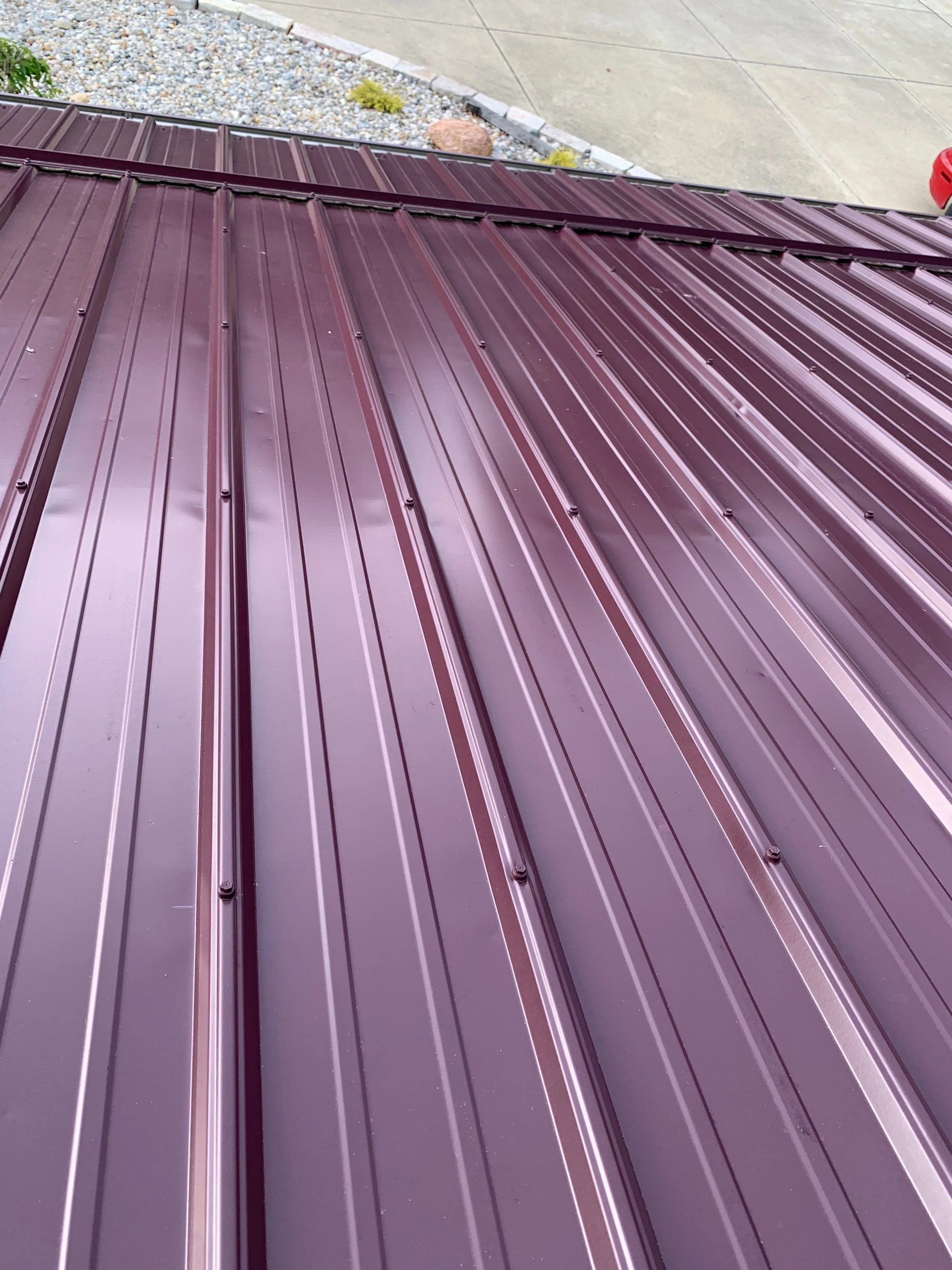
Late spring hail hit a Holliday Farms self storage facility hard. The owner walked the property and saw no obvious damage, so he waited. Three weeks later, tenants in twelve units reported wet boxes. The metal panel roof had taken hundreds of small bruises, and the coating had fractured at the high points. Water was entering through pinholes too small to see from the ground.
We coordinated with his insurance adjuster, documented every impact with chalk circles and drone photos, and dried the affected units before mold set in. The repair scope ended up being a full recoat on two buildings and panel replacement on a third. The lesson for any Holliday Farms property owner: a clean visual inspection after hail does not mean the roof is fine. Schedule a proper commercial roof inspection within a few weeks of any significant storm, even if nothing looks wrong from the parking lot.
What Tenants and Property Managers Should Document
When a leak shows up, the faster you capture details, the smoother the repair and any insurance conversation will go. The short version:
- Time, date, and weather when the leak first appeared
- Photos of ceiling staining, floor pooling, and any affected inventory
- HVAC unit locations near the active leak (often a clue)
- Last known roof service or warranty paperwork
- Any prior repair invoices or core sample reports on file
That packet, plus our inspection report, usually gives an adjuster everything they need without a second site visit. Property managers who keep a simple roof folder per building tend to settle claims faster and pay less out of pocket. It is one of the lowest effort, highest payoff habits we see in this trade.
The Restaurant That Could Not Close
A Friday night call from a restaurant owner: water was running down the wall behind the bar, and a private event was booked for Saturday at 6 p.m. Closing was not an option. Our crew arrived, found a separated seam on the EPDM near a grease exhaust curb, and installed an emergency tarp and interior containment by midnight. The permanent seam repair happened Sunday morning before opening prep.
This is the kind of call that lives or dies on triage. We do not promise a specific arrival window, but active commercial leaks get prioritized for tarping and dry in so the building keeps running while a permanent fix gets scoped. Same logic applies whether you operate a restaurant, a clinic, or a distribution center.
One detail worth pulling out of that restaurant job: the grease exhaust curb is one of the most common failure points we see on food service roofs in Holliday Farms. The constant heat cycling around those curbs ages the membrane two to three times faster than the field of the roof. If your building has been frying since the Clinton administration, the curbs probably need flashing attention regardless of whether you have an active leak yet. We tell every restaurant client to put grease curb inspections on the same calendar as their hood cleanings.
The Warehouse Where We Said No
One of the more honest moments this year was a Holliday Farms warehouse owner asking for a patch on a 28 year old built up roof that had failed in four separate zones. We walked it, took core samples, and told him patching was throwing money away. The insulation was saturated across roughly 40 percent of the deck, and the felt layers were delaminating. He needed a commercial roof replacement, not another repair invoice. He appreciated the straight answer, got two more bids, and ended up scheduling the tear off with us six weeks later.
The piece of that conversation worth repeating: he had spent close to $14,000 on spot repairs across the previous three years. Every dollar of that was effectively wasted because the underlying system was past saving. Holliday Farms Metal Roofing would rather lose a repair ticket and earn the replacement than keep cashing checks on a roof that should be in a dumpster.
What Commercial Leak Repairs Actually Cost in Holliday Farms
Owners always want a number. The honest answer is that commercial roof repair pricing depends on membrane type, access, square footage of saturated insulation, and whether the deck below is still structurally sound. Across recent Holliday Farms jobs, emergency tarp and dry in work typically lands between $650 and $1,800. A single penetration repair, such as a vent boot or pitch pan rebuild, generally runs $900 to $2,800. Seam or flashing repairs on TPO and EPDM systems usually fall in the $1,500 to $4,500 range. A section replacement that includes pulling and replacing wet insulation can stretch from $3,500 to $10,000 or more depending on how far the moisture has migrated.
Those ranges assume a building under 30,000 square feet with reasonable rooftop access. Lift rental, after hours labor, and tear out of multiple insulation layers can push numbers higher. The cheapest call is almost always the one that happens before water reaches the deck, which is why the warehouse story below stings every time we tell it.